Emergency Dental Care in Korea
If you or someone you’re with experiences a dental emergency in Korea, knowing how clinics handle urgent cases — and what to expect — can make treatment faster and more affordable. Korea’s dental clinics and hospitals are generally well-equipped to manage pain, trauma, infection, broken teeth, and more.
This guide explains how emergency dental care works in Korea, what services you can access, typical costs, and tips for foreign visitors.
What Counts as a Dental Emergency
You may need urgent dental care when you have:
- Severe toothache that doesn’t improve with over-the-counter pain relief
- Broken or knocked-out teeth
- Lost fillings or crowns causing pain or sensitivity
- Swelling or infection (gum abscess)
- Bleeding that won’t stop after injury
- Trauma to the mouth or jaw
- Severe pain after procedures (e.g., root canal or extraction)
If your situation involves jaw fractures, severe bleeding, or systemic symptoms (fever, difficulty breathing), you may need hospital emergency services rather than a dental clinic. Call emergency services (119 in Korea) or go to a hospital ER.
Where to Get Emergency Dental Care
Walk-In Dental Clinics
Many dental clinics in major cities (especially Seoul, Busan, Daegu, and Incheon) accept walk-in emergency patients during regular hours. These facilities can often handle:
- Pain relief and diagnostic exams
- Temporary fillings or crown repairs
- Tooth extractions
- Antibiotics and infection management
After-Hours Dental Clinics
Some clinics provide extended evening or weekend hours specifically for urgent dental needs. Search with terms like “emergency dentist Seoul” or ask your hotel/host for recommendations.
Hospital Dental Departments
Universities and large hospitals often have dental departments that can manage complex emergencies and trauma cases — especially after hours.
How Emergency Treatment Works
- Triage and evaluation: Dentist assesses pain, injury, infection, and urgency.
- Imaging: Digital X-ray or 3D scan (CBCT) to understand the problem.
- Immediate care: Depending on the issue, this might include:
- Pain control and medication
- Temporary restorations
- Extraction of damaged teeth
- Drainage of abscess or infection
- Re-cementing crowns
- Referral for surgical care if needed
Most emergency visits focus on stabilizing the situation — a follow-up appointment may be needed for definitive treatment.
What to Bring When You Visit
- Passport or ID
- List of symptoms and when they started
- Photos of the issue (if possible)
- Any dental X-rays from home
- A list of medications you’re taking
Typical Costs (Out-of-Pocket)
Costs vary by treatment complexity, but general ranges for urgent care in Korea are:
Basic Evaluation and X-ray
- Exam: ₩30,000–₩80,000
- Dental X-ray: ₩30,000–₩70,000
Emergency Dental Services
- Temporary filling / repair: ₩70,000–₩150,000
- Tooth extraction: ₩100,000–₩300,000
- Pain management + medication: varies
Infection Management
- Antibiotics and pain meds: ₩20,000–₩50,000
More Complex Urgent Care
- Root canal emergency visit: ₩200,000–₩500,000
- Emergency crown repair/replacement: depends on materials
These are rough ranges — clarify costs before treatment. Many clinics offer first-visit quotes for emergencies.
For Foreigners: Language & Communication
Not all clinics have English-speaking staff, so when calling or walking in:
- Ask if English support is available
- Mention your symptoms clearly
- Use simple phrases or translation apps if needed
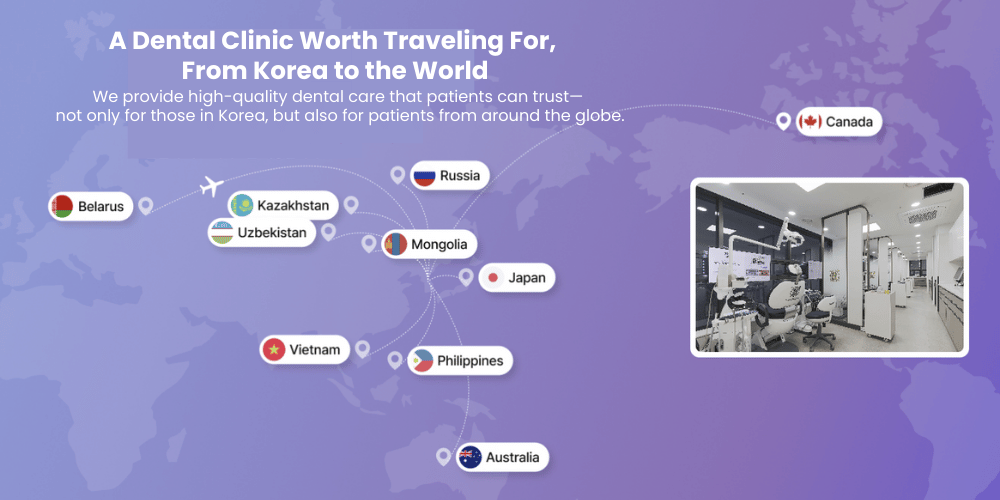
Many Seoul-area clinics and international hospitals provide multilingual service (English, Chinese, Japanese, etc.).
When to Go to a Hospital ER
If your situation involves:
- Intense bleeding that won’t stop
- Jaw fractures or severe facial trauma
- Difficulty breathing or swallowing
- High fever with dental pain
- Loss of consciousness or severe injury
Then go directly to a hospital emergency department rather than a dental office.
After Emergency Care
Once the urgent issue is stabilized:
- Schedule a follow-up appointment with the same clinic
- Ask for a written treatment plan and quote
- Clarify aftercare instructions in writing
If you’re a tourist:
- Know who to contact in your home country for dental records
- Bring photos/scans back for continued care
Tips to Reduce Emergency Costs
✔ Seek treatment early before symptoms worsen
✔ Ask for written cost estimates
✔ Go to clinics with transparent pricing
✔ Avoid over-the-counter painkillers without consulting a dentist
Final Takeaway
Emergency dental care in Korea is generally:
- Fast and efficient
- Modern and well-equipped
- Affordable compared to many Western countries
For foreigners, knowing how clinics handle urgent cases — and where to go — makes a big difference in pain relief and cost control.